
Category: Mythology
-
The Changeling—Swapping Life for Life

Although found in many cultures, the Celtic changeling is a faerie that has been exchanged with a human child by other nefarious faeries. The motives for such a swap range from punishment, revenge, and jealousy to a complicated hoax in which the changeling is an elderly faerie who needs to live out his years in…
-
Big Grey Man Incites Fear
Enveloped in mist and trailing a dank chill in his wake, Am Fear Liath Mòr (pronounced am fair LEE-ah mor) emerges from the sea as fog to haunt the British Isles. Also known as the Big Grey Man of Ben MacDhui in Scotland, he has other names in Ireland—the Brolaghan (which means “a formless or…
-
Kelpie Hauntings
Typically appearing as a strong, magnificent stallion or a gentle, lost pony, the kelpie was a malevolent shapeshifting spirit that haunted the lochs (lakes) and deep rivers of the Scottish Highlands. With the legendary strength of 10 horses and a wet, dripping mane, its tail crashed like thunder when it hit the water. The kelpie…
-
Caorthannach—A Fire-Spitting Demon
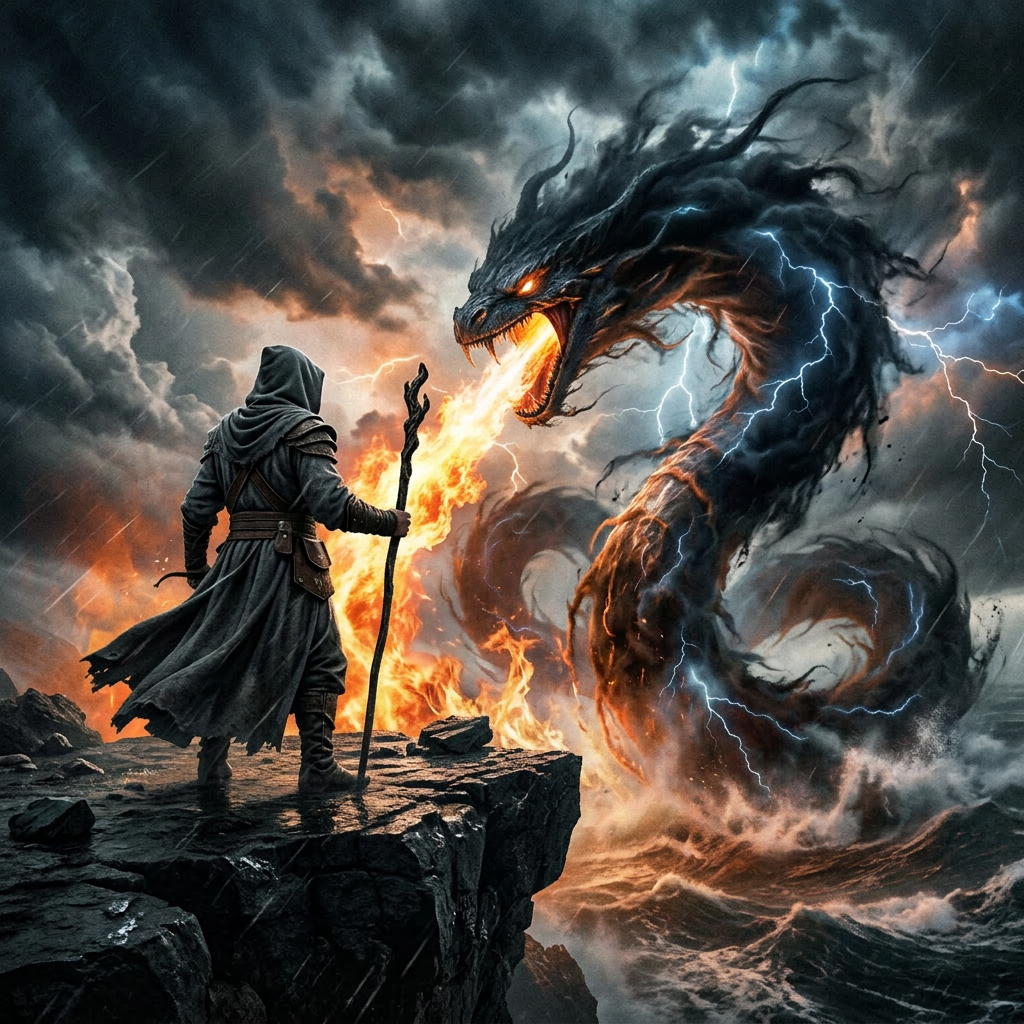
Considered by some to be the devil’s mother, by others as the forebearer of all things wild who claimed birth and death to herself, and yet others as the progenitor of all the gods, Caorthannach (KEER-hawn-nock) is known to the Celts as the Fire Spitter. An oilliphéist (great sea monster), she haunted swamps and lakes,…
-
Merrow Steals Hearts and Wealth
Alluring yet ambivalent, the Merrow is a sea faerie, famous for stealing men’s hearts and wealth. With her glistening, fish-like tails hidden by waves, she would seduce sailors and fishermen as she posed on rocky precipices, combing her windblown, radiant hair. As a solitary faerie, the merrow has a natural antipathy toward humans. According to…
-
Headless Dullahán—An Ancient Agent of Death
Like the banshee, the Dullahán is a harbinger of death. Unlike a banshee, though, the Dullahán does not warn. When he stops riding and calls out a name, death is swift and imminent. Commonly known as the Headless Horseman or Gan Ceann (pronounced gan chann, meaning “without a head”), Dullahán means “dark man.” Clad in…
-
The Leprechaun—A Dangerous Trickster
Saint Patrick, who is revered for having single-handedly converted Ireland from Celtic paganism to Christianity, is nonetheless associated with a very pagan character—the leprechaun. With a reputation for chicanery and a predisposition toward foul play, the legendary trickster may be the embodiment of an ironic last laugh. Leprechauns In general, leprechauns are solitary, dangerous, and…
-
Banshee Legends—Keen on Death
My fascination with Celtic mythology began with the 1959 movie Darby O’Gill and the Little People. It wasn’t O’Gill’s obsession with the mischievous leprechauns that caught my attention. Nor was it the handsome Sean Connery, or even the pretty young girl who fell over a cliff—and for him. It wasn’t even the headless horseman who…
-
Frightful Fantasies of Irish Faeries
From banshees to vampires, frightful faeries comprise the mythology of both ancient and contemporary Ireland. Understanding Irish mythology begins with understanding the Celts and pre-Celts who inhabited the isolated island. When the Celts (also known as Milesians) arrived in Ireland between 500 and 300 BC from Central Europe, they found a diverse group of people…