
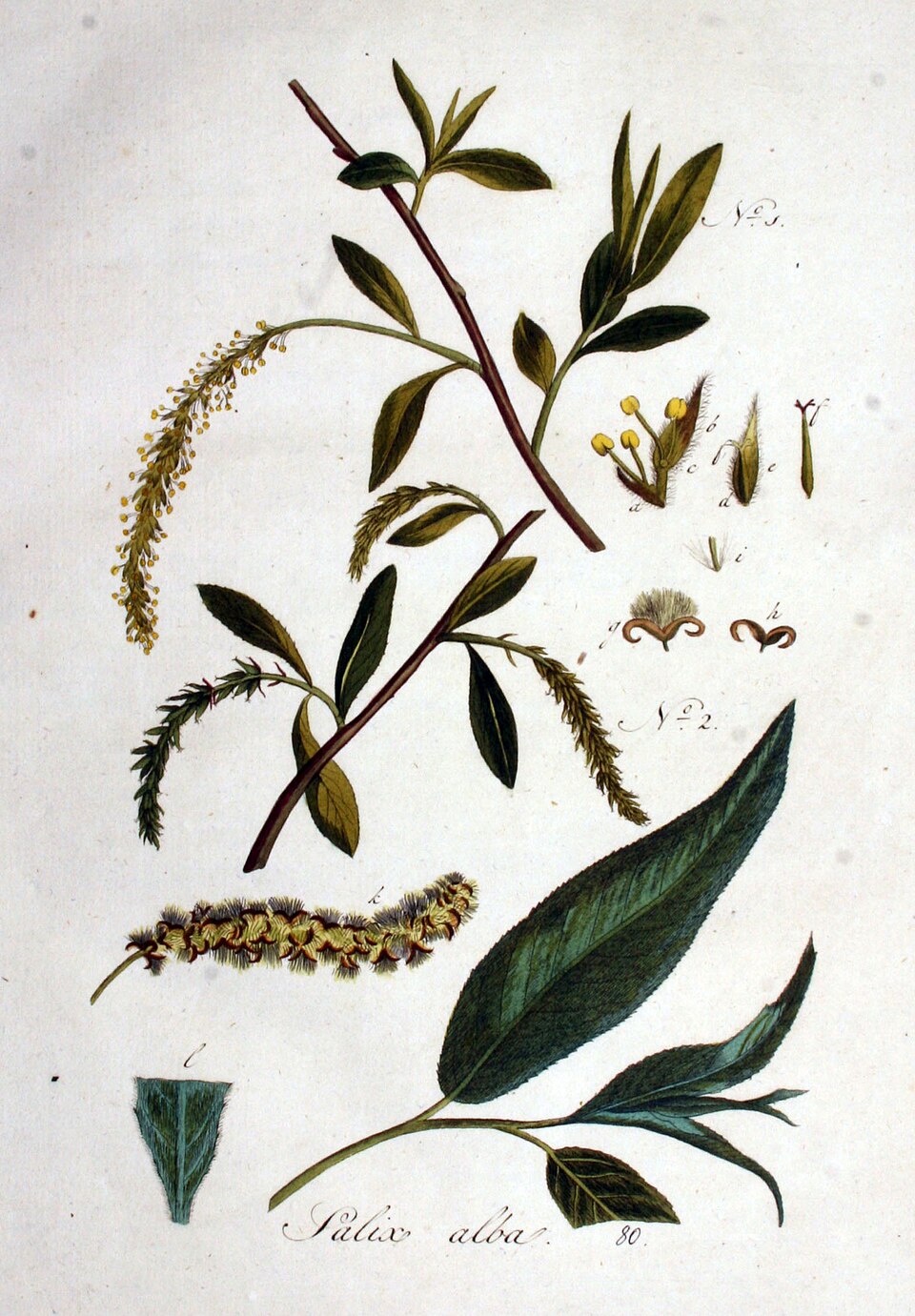
With supple branches and silvery-green leaves that dance in the wind, the willow evokes femininity, magic, and healing. While there are more than 300 species of willow (Salix), the most common image is the weeping willow (Salix babylonica). The one represented by Saille, however, is the white willow (Salix alba), so named because its pale leaves are covered with fine, silky white (alba) hairs on the underside.

Photo credit: commons.wikimedia.org

The white willow corresponds to the fifth moon of the Celtic Tree Calendar (April 15 – May 12). It is expressed by the character Saille (SAHL-yeh), the fifth consonant of the Ogham alphabet, and the letter “S.”

“Saille,” incidentally, became the word “sally.” As both a noun and a verb, it means a sudden burst of action, expression, or emotion. Although the traditional name Sally comes from the Hebrew name Sarah, meaning “princess,” the name related to Saille has gained popularity beyond its original Celtic culture and language.
Feminine Mystique
Like all willows, Salix alba grows best in a temperate, rainy climate in wet or poorly-drained soil along the edges of lakes, rivers, and in water meadows. Its deep, wide-spreading roots soak up moisture from the surrounding area.
Because it grows on the brink of land and water, and because its overhanging branches convey mourning and death, it is a portal to and a means of communicating with the Otherworld. This explains its popularity in graveyards and as a motif on tombstones.
Despite its associations with sadness, the willow symbolizes tenacity and resilience, as it can survive harsh conditions. Because willow regenerates easily if you place a cut twig or a branch in the ground, it is linked to new growth, regeneration, and inspiration. It stands for hope, particularly in its ability to withstand strong winds and storms.
Death and Transformation
According to the website The Druid, funerary flints shaped as willow leaves have been found in graves from the Old Stone Age. While the tree has been linked with death, grief, and cemeteries, the leaves also represent unrequited love.
Saille connotes the transformational and magical aspects of the Morrigan, a triple goddess depicting maiden, mother, and crone. This concept reinforces the cyclical nature of life, the phases of the moon, and the stages of a woman’s life. In Celtic lore, death is followed by rebirth.
As a harbinger of new beginnings and nourishment, Saille is thus associated with Monday and bees.
Magic and Medicine
Known also as osier, pussy willow, salicyn willow, saugh tree, witches aspirin, withe, and withy, white willow has many uses in healing.
The inner bark contains salicylic acid, the active ingredient of aspirin. Scrapings were used in traditional folk medicine to alleviate pain, lower fevers, relieve rheumatic conditions, and treat dyspepsia.
According to The Druid, it can also be used as a diuretic; a gargle for sore throats and gums; and an external wash for sores, skin problems, wounds and burns. A decoction of leaves and bark, simmered, can be used to treat dandruff.
Traditionally, willow was used for protection, fertility, femininity, divination, friendship, joy, love, and peace. It is said to bring harmony and balance to those who seek its influence in meditation. The leaf may also be worn to protect against jealousy.
In the Bach Flower Remedies, willow flower essence is used to treat bitterness and resentment.

Shavings of the wood, pieces of bark, and whole leaves can be placed in a small bag under your pillow to assuage powerlessness, panic attacks, and grief. Placing a wand of willow under your pillow, especially around the full moon, promotes night visions.
A willow planted near your home will ward off danger, particularly if it stems from natural disaster such as flooding or storms. Willow wood in the home allegedly guards against evil.
Willow (osier) branches are said to be the best for divining water, channeling earth energy, and finding lost objects. Other uses include wattle-and-daub walls, fence posts, wicker furniture, barrels, basketry, and cricket bats.
Due to its watery origins, wicker resists water and weather damage in outdoor applications. This same property makes it difficult to season.
An aromatic tree, the willow is one of the Seven Sacred Irish Trees and a sacred Druid Tree. The birch twigs of a witch’s broom were traditionally bound with willow.


Leave a Reply